


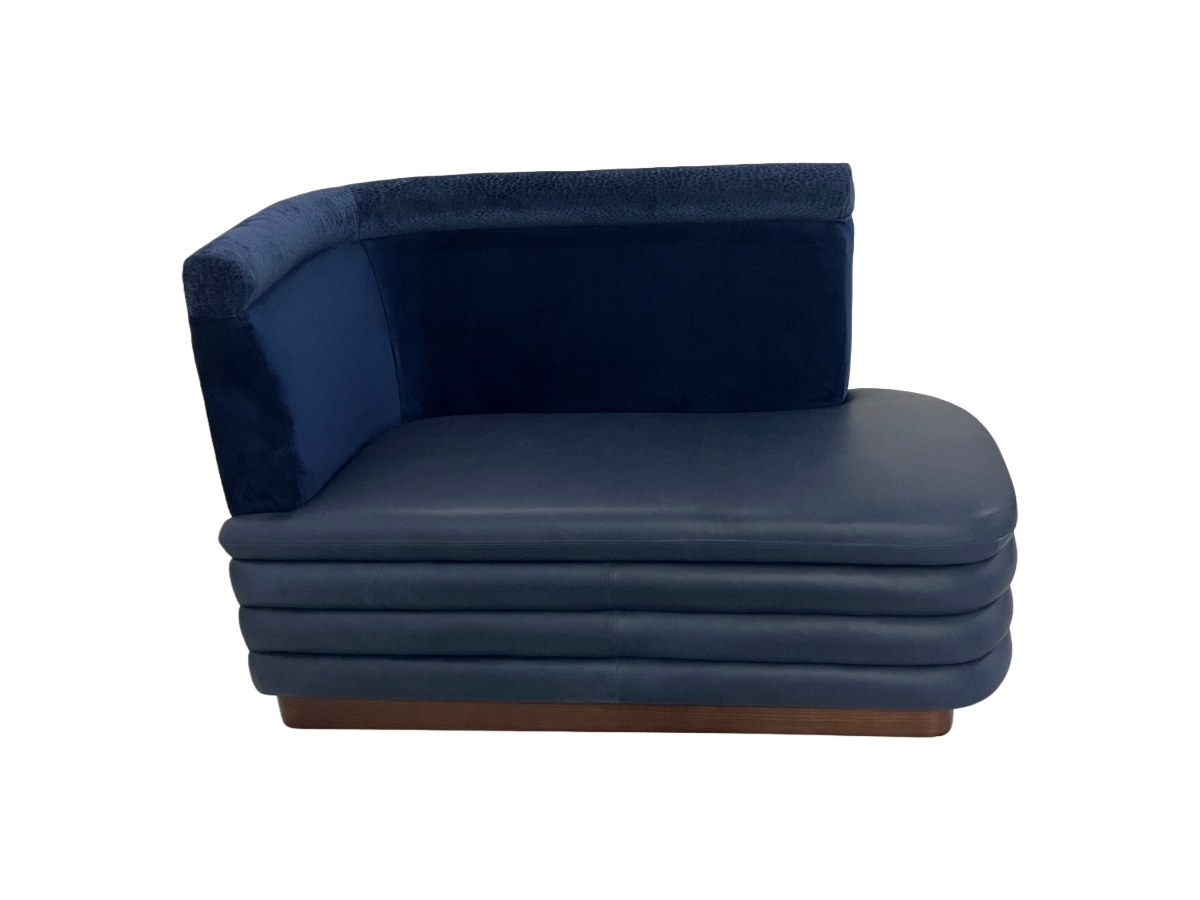
Luxury furniture for hotels is usually specified by appearance and then judged by endurance. The piece that looks extraordinary on opening night has to survive a decade of suitcases, cleaning agents, and guests who treat a hotel room as a place where nothing can break. When the two goals are treated as separate, the result is either a beautiful room that ages badly or a durable room that feels like a mid-market product with better lighting.
We have built furniture for five-star hotels and resorts since 1997, and the most convincing luxury interiors we have supplied share a principle: the money goes into what a guest touches, and the engineering is hidden behind it. This guide explains where that spend belongs, which details signal quality without costing a fortune, and how to keep the standard intact through the property's life.
Luxury is felt before it is seen
Guests do not assess a hotel room by reading a specification. They notice weight when they open a drawer, the sound a door makes when it closes, whether a chair moves quietly on a hard floor, whether the edge of a desk feels sharp under the wrist. These are engineering decisions dressed as aesthetics, and they are what separates a room that photographs as luxurious from one that feels it.
A heavy drawer needs a solid box, a properly rated runner, and a carcase rigid enough not to flex. A door that closes softly needs the right hinge and enough mass in the panel. A chair that moves without scraping needs glides chosen for the actual floor. None of these show up in a render, and all of them are noticed within the first hour of a stay.
Where the budget should actually go
| Element | Worth spending on | Worth saving on |
|---|---|---|
| Touch surfaces | Desk tops, drawer fronts, armrests, headboard fabric | Hidden panels and internal structure that no guest sees |
| Hardware | Runners, hinges, handles — used every day, felt every time | Decorative hardware on pieces that are rarely opened |
| Upholstery | Seat foam density and the fabric performance tier | Back cushions in low-contact positions |
| Joinery | Corner construction on chairs and casegoods that get moved | Ornamental detail that adds cost but not comfort |
| Finish | Coats, cure, and repairability on high-use tops | Speciality finishes in positions that will be replaced |
The materials that read as premium and last
Solid timber, veneer, stone, leather, and wool all carry a quality signal that laminate and synthetic fabrics cannot fully imitate. The question is not whether to use them but where, because each has failure modes that appear under hotel use.
Veneer on a stable core gives the warmth of timber with better dimensional control than solid wood, which matters in air-conditioned rooms where humidity swings. Stone tops are superb in suites and lobby credenzas, provided the edge detail is robust and the substrate can carry the weight. Leather ages well if it is the right leather: a corrected-grain or coated leather resists staining, while an aniline finish looks extraordinary and marks early.
Wool and wool-blend fabrics feel richer than synthetic equivalents, but the performance tier still has to match the position. A wool in a suite bedroom is a reasonable luxury; the same wool on a lobby chair will pill and soil within a season.
Detail that signals craft without adding fragility
Luxury is often read through restraint rather than ornament. A consistent shadow gap, a precisely aligned drawer reveal, a headboard seam that lands where the eye expects it — these cost engineering attention rather than expensive materials, and they are what a well-travelled guest registers as quality.
Conversely, fragile details undermine the impression they are meant to create. A slim metal leg that flexes, a glass top that chips at the corner, a high-gloss lacquer that shows every fingerprint: each reads as premium on day one and as a maintenance problem by month six. The test is not whether a detail looks luxurious in a sample, but whether it still looks that way after a thousand uses.
Keep the standard through the property's life
A five-star standard is maintained by replacement and repair, not by the original order alone. That requires three things at handover: the approved finish samples, the material references, and a spare allowance for the pieces most likely to be damaged. Without them, a single damaged nightstand can force a room out of inventory or introduce a visibly different finish.
It also requires a repair route. Upholstery that can be re-covered, tops that can be refinished, and hardware that can be replaced individually extend the life of a piece far beyond its warranty period. Specify for repairability, and the initial investment keeps paying.
The bed wall carries the room
In most hotel rooms the bed wall is the largest visual element and the first thing a guest sees from the doorway. It is also the place where a luxury impression is easiest to achieve and hardest to maintain, because it combines upholstery, timber, lighting, and hardware in one composition.
A headboard that is padded and panelled reads richer than a flat board, provided the padding is firm enough not to crease where guests lean back. A bed base that is integrated rather than a separate divan looks more considered, but it has to be engineered so the mattress can still be turned and the base can still be cleaned underneath. A floating nightstand looks elegant and needs a fixing designed for the actual wall, not a bracket chosen on site.
The detailing that lasts is usually the least dramatic: a consistent seam line, a shadow gap that stays even, a fabric that is tight enough not to sag after a year of leaning. These are decisions made in the sample room, and they are the reason a prototype matters more on the bed wall than anywhere else in the room.
Furniture and lighting are one decision
A premium finish can look ordinary under the wrong light. Veneer that appears warm in a studio reads flat under a cool downlight, and a satin lacquer becomes a mirror when a lamp is placed directly above it. Review the finish samples in the room, with the lighting that will actually be installed, and if the lighting is not chosen yet, choose it before the finish is approved.
This is also why bedside lighting belongs in the furniture conversation. A pendant that hangs to the wrong height, a reading light that shines into a partner's eyes, or a switch that cannot be reached from the bed all undermine a room that otherwise feels considered.
Frequently asked questions
Does luxury furniture for hotels have to be custom made?
Not necessarily, but the finish, proportions, and hardware usually have to be adapted to the brand standard. A standard product with a custom finish can be more coherent than a bespoke piece built without hotel experience.
How do we keep a premium look in high-traffic areas?
By moving the luxury signal from delicate materials to robust ones: heavier frames, tighter tolerances, better upholstery, and a finish that can be repaired rather than replaced.
Is solid wood always better than veneer?
No. Veneer on a stable core is often more dimensionally reliable in a climate-controlled building, and it uses material more efficiently. The construction matters more than the label.
What is the most common luxury specification mistake?
Specifying the visible surface and leaving the internals to the factory. The guest never sees the drawer box, but they feel it every time they open the drawer.
How many finish samples should be retained?
At least two per material, stored on site and at the manufacturer, so a reorder years later can be matched rather than guessed.
Luxury furniture for hotels is an engineering achievement disguised as a design choice. Spend on the surfaces guests touch, engineer the parts they do not see, and keep the references that let the standard be maintained, and the room will still feel five-star long after the opening photographs have faded.
Why global hospitality teams work with OC International
OC International (OCI) has manufactured loose and fixed furniture for five-star hotels, resorts, and serviced residences since 1997. From our manufacturing base in Dongguan we support owners, developers, design firms, and FF&E consultants across the Americas, the Middle East, and Asia with one accountable team covering design development, production, quality control, packing, shipping, and on-site installation.
What our manufacturing base delivers
- Detailed joinery, veneer work, and hand finishing produced in-house, so the touch surfaces and the structure come from one team.
- Builds engineered to CAL 117, CAL 133, TB 133, EN 1021, BS 5852, FSC timber, and CARB P2 under an ISO 9001-controlled production process.
- Finish systems specified by coat build and cure, with repairability considered at specification stage.
- Retained finish samples and spare pieces to keep a property's standard consistent through its life.
Selected delivered projects
Our furniture has been delivered to landmark properties including the Fairmont Austin, Four Seasons Chicago, Sheraton Dhaka, Marriott Sydney, Conrad Los Angeles, and Hilton DoubleTree projects across multiple regions, each specified to the operator's brand standard and installed to opening.
Looking for luxury furniture for hotels that survives service? Send us the suite and public area drawings and we will price the touch surfaces properly.
See public area sets Discuss a luxury schemeYour email address will not be published. Required fields are marked *